Fetal alcohol spectrum disorder diagnostic clinic capacity in Canadian Provinces and territories

“…This study examined the capacity for interdisciplinary team diagnosis of FASD across selected provinces and territories in Canada. Capacity.. has either remained stable or fallen in all jurisdictions studied between 2015 and 2019..This study revealed that approximately 98% of cases of FASD are underdiagnosed or misdiagnosed, which is supported by previous publications…”
An Empirical Examination of Confabulation in Adolescents with Fetal Alcohol Spectrum Disorder (FASD)
Confabulation is when missing memories are unwittingly filled in with distorted or fabricated information. This has been shown to lead to incorrect information in legal cases involving suspects, witnesses or victims of crime. This study is the first to experimentally explore confabulation in adolescents with fetal alcohol spectrum
disorders (FASD).
Access to oral health care for children with fetal alcohol spectrum disorder: a cross-sectional study
The objective of this cross-sectional study is to examine the use of oral health care services by children diagnosed with FASD in Saskatchewan, Canada, and to identify perceived barriers that affect their access to oral health care.
Does paternal alcohol consumption affect the severity of traits of fetal alcohol spectrum disorders?
Paternal alcohol consumption was associated with an independent, negative influence on child height, head circumference, and verbal IQ. Maternal drinking, when combined with heavy male drinking, was associated with more severe FASD outcomes.
Learning with FASD

This factsheet will assist secondary school teaching and support staff to better understand social and emotional development in adolescents with Fetal Alcohol Spectrum Disorder (FASD).
FASD, COVID-19, and Aggression
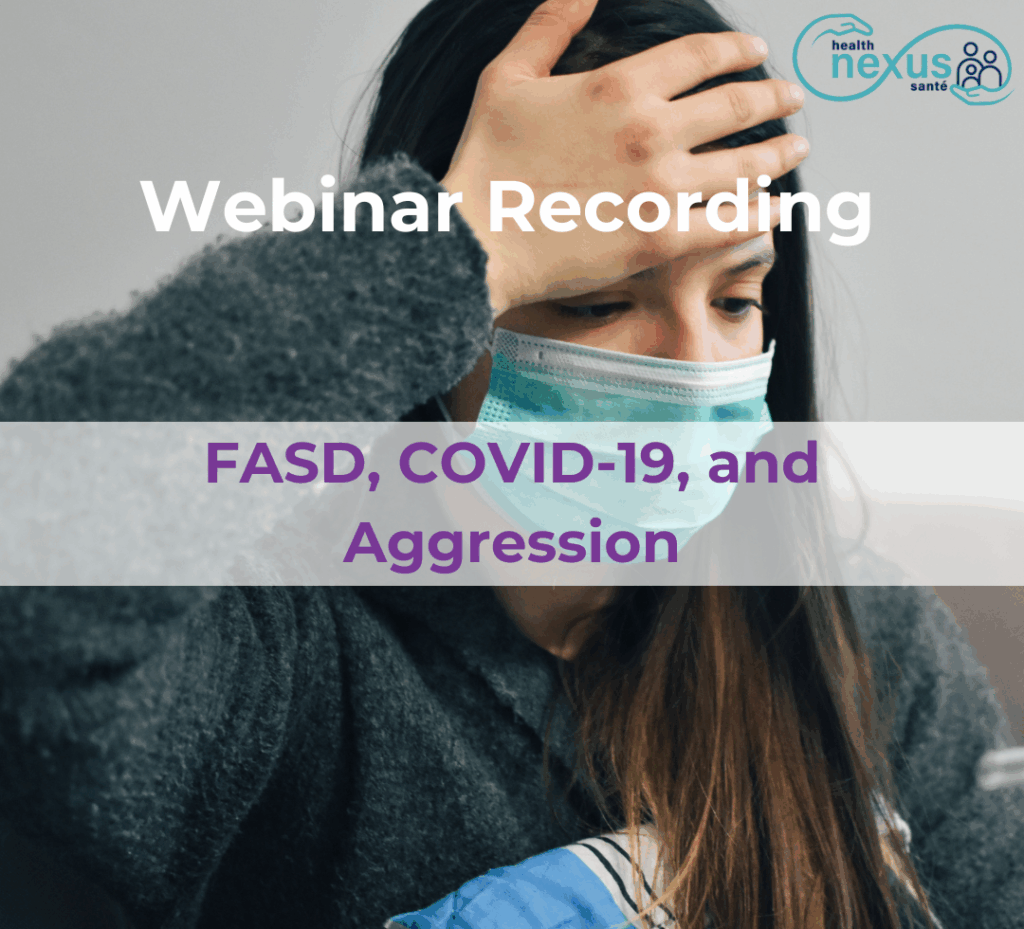
The webinar presents new research updates on child-to-parent aggression in the home.
Be the Village

FASD Prevention Program of the Saskatchewan Prevention Institute providing guidance to raise FASD awareness and build a village that supports healthy pregnancies and embraces individuals living with FASD.
A Population-Based Study on Women Who Used Alcohol during Pregnancy and Their Neonates in Ontario, Canada
It is crucial to screen childbearing age and pregnant women who use alcohol for mental health problems and other substance use and to facilitate access to treatment services to prevent adverse maternal and neonatal outcomes. Routine screening and data collection on alcohol use in pregnancy are urgently needed on provincial, national and global levels.
Population perinatal substance use and an environmental scan of health services in British Columbia, Canada
Expanding supports for perinatal substance use – particularly acute care and supportive housing within more rural/remote regions in BC – will be critical to address geographic inequities in access to perinatal care and improve health outcomes for pregnant people who use substances and their infants.
FASD Prevention: An Annotated Bibliography of research published in 2024 (CanFASD)
Annually, researchers associated with the Prevention Network Action Team (pNAT) of the CanFASD Research Network search the academic literature for articles related to Fetal Alcohol Spectrum Disorder (FASD) prevention. The findings are organized using a four-level prevention framework developed by the pNAT to describe the wide range of work that comprises FASD prevention. The annual literature search is intended to update those involved in FASD prevention in Canada, so they can inform their practice and policy work with current evidence. The members of the pNAT also have the opportunity in monthly web meetings to discuss the implications of the findings for their work.
Beyond the Brain: The Physical Health and Whole-Body Impact of Fetal Alcohol Spectrum Disorders
Recent clinical evidence integrated with the lived experiences of adolescents and adults with fetal alcohol spectrum disorder (FASD) highlights the range of physical health challenges people can experience.
The oral health-related quality of life for individuals with fetal alcohol spectrum disorder – a cross-sectional study

The purpose of this study is to compare the oral health-related quality of life (OHRQoL) of individuals with FASD and the general population in Saskatoon, Saskatchewan. Additionally, it aims to suggest ways to improve the oral health status and OHRQoL of these individuals.

