8 Magic Keys for Developing Successful Interventions for Students with FASD
Animated video of 8 strategies educators can use to help students with FASD (21 minutes)
6 Things Educators and School Staff Should Know About FASD
Tips and strategies for teachers of children and youth with FASD; what parents of children with FASD want educators to know. Note: uses American diagnostic terms (9 minutes)
3rd Biennial FASD ONE symposium – Using Screening, Diagnosis and Data to Improve Outcomes
Webinar/presentation by Dr. Jocelynn Cook about diagnosis of FASD and 2016 guidelines (approx. 45 minutes)
3rd Biennial FASD ONE symposium – FASD, Justice and Evidence-Based Practice
Webinar/presentation by Dr. Kaitlyn McLachlan about FASD in the legal/justice system (approx 45 minutes)
3rd Biennial FASD ONE symposium – FASD as a Mobilizer in Education Change
Webinar/presentation by Sean Monteith (Director of Education – Keewatin Patricia District) about FASD and education; mention of Indigenous issues in education (approx 45 minutes)
3rd Biennial FASD ONE symposium – Building Community Through an Indigenous Lens
Webinar/presentation by Sylvia Maracle (Executive Director of the Ontario Federation of Indigenous Friendship Centre) about FASD in Indegenous communities (approx 45 minutes)
2020 Inspiring Possibilities Estate Planning Guide
A tax, benefits, trusts and wills toolkit for Ontarians with disabilities (111 pages)
National FASD Program: Social Return on Investment
In 2023, almost 90,000 children are estimated to have been born after exposure to the potentially harmful effects of alcohol during pregnancy.
In this report Impact Economics and Policy has estimated that the lifetime economic and social costs of exposure to alcohol during
pregnancy in Australia range between $2.7 billion and $6.4 billion per year.
Reducing the costs of alcohol harm during pregnancy requires improved access to diagnosis, increased awareness of the harms, and continued support for campaigns like the National FASD Program Campaign. This campaign has successfully improved awareness and reduced the number of pregnant persons consuming alcohol, leading to fewer cases of FASD, premature births, and other pregnancy-related complications.
The “Pebble in Your Shoe” Model of Effectiveness: Laurentian University Undergraduate Students’ Perspectives on Campaigns Regarding Alcohol Use During Pregnancy

Using intersectionality theory, basic qualitative design, thematic analysis and focus group discussion, the “Pebble in Your Shoe” Model of Effectiveness was developed based on community perspectives. This model could be utilized in the development and evaluation of future Level 1 FASD Prevention campaigns.
Caregiver approaches, resiliencies, and experiences raising individuals with fetal alcohol spectrum disorder: A study protocol paper
The goal of this paper is to share information about why and how this study is being done, and potentially guide other teams in developing similar projects to better understand caregivers’ experiences, needs, and successes. Documenting and giving voice to the breadth and depth of caregiver experiences will help us to tailor services and supports, develop resources, stimulate knowledge translation based in resilience and protective factors, guide future studies, and inform evidence-based policy initiatives.
Mindfulness for Caregivers Podcast Series
Sue leads us through a guided meditation as a tool for caregivers.
What is Your Superpower?: Growing and Glowing with FASD
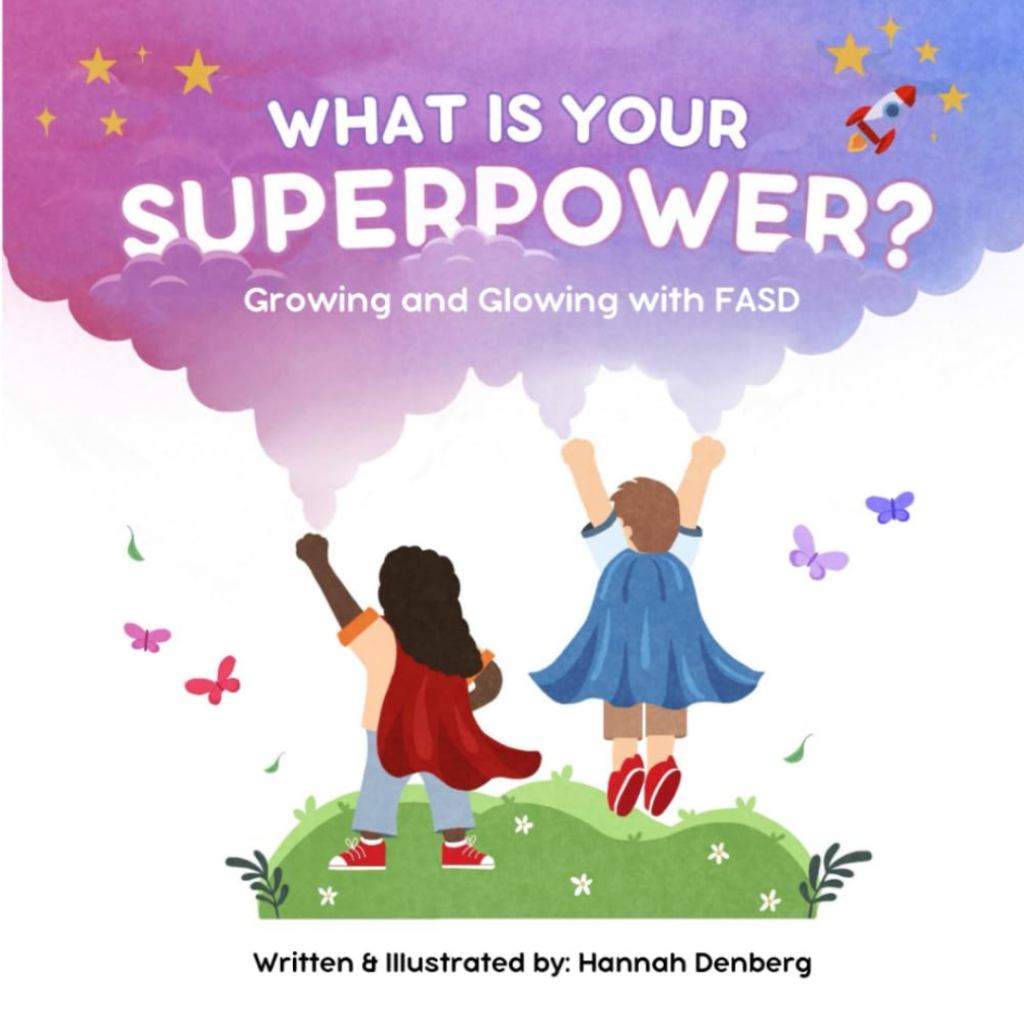
Hannah Denberg gives a live reading of her beloved children’s book, ‘What is Your Superpower?: Growing and Glowing with FASD’.

